10 hr
Oslob Whale Sharks, Tumalog Falls & Moalboal Sardine Run
Swim alongside gentle whale sharks, chase millions of sardines, and cool off beneath jungle waterfalls
Reserve
Hand-picked by our editors — only the best 5 experiences from 47 reviewed.
Verified partners for every tour, free cancellation where available, and instant confirmation on every booking.
10 hr
Swim alongside gentle whale sharks, chase millions of sardines, and cool off beneath jungle waterfalls
Reserve
10 hr
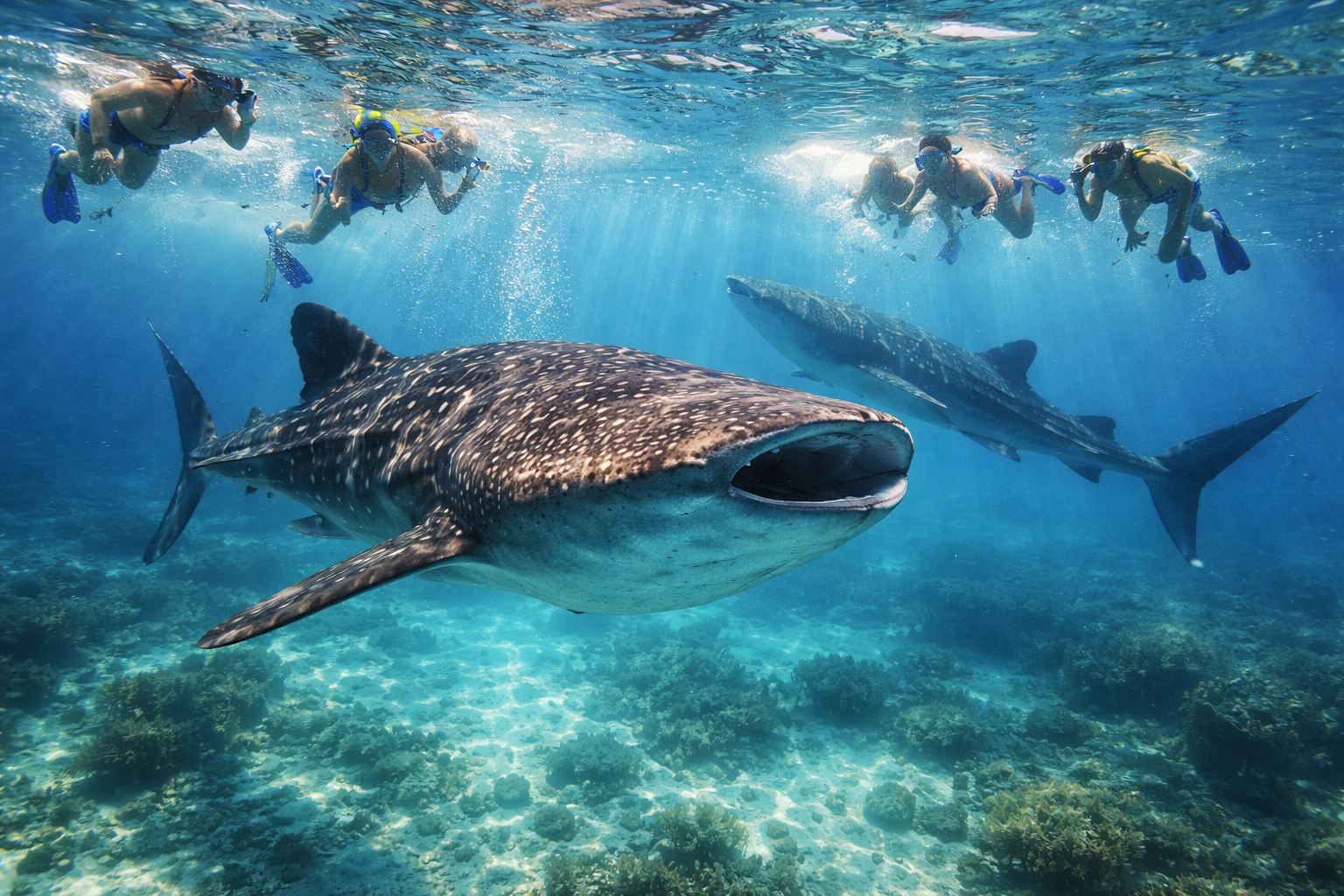
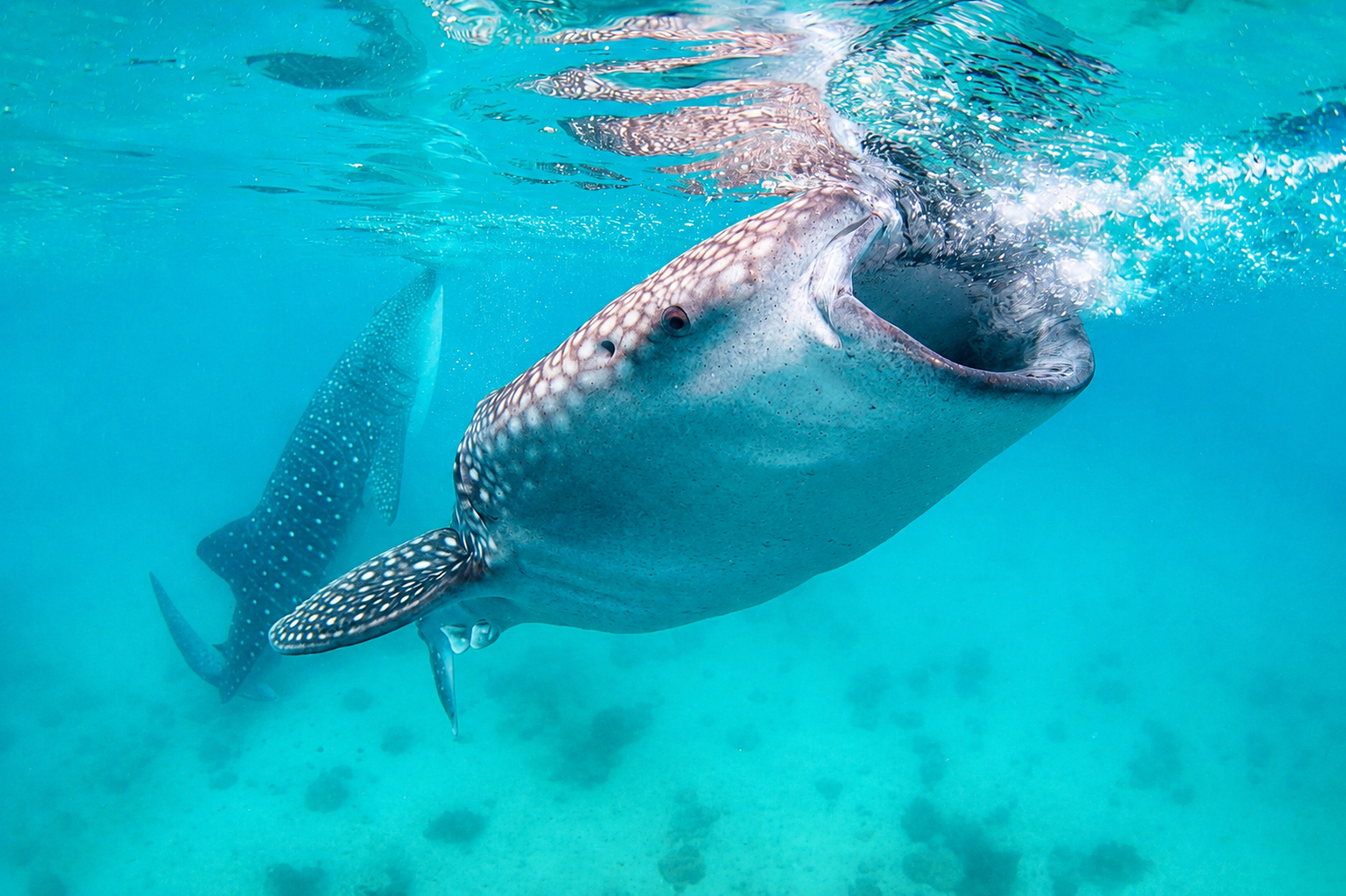
Swim with gentle giants and witness nature's spectacle in crystal-clear Philippine waters
Reserve
12 hr
Swim with whale sharks, meet playful monkeys, and dive into the famous sardine run—all in one epic day
ReservePrices from verified partners. Availability updates in real time at checkout. Free cancellation policies apply where shown.
The landmarks, rooms, and views travelers on this tour remember — all visible on a single visit.
Millions of sardines form a massive moving wall that stretches vertically through the water column.
A vibrant section of the reef featuring diverse hard and soft coral species.
The edge of the reef where the seafloor descends into the deep ocean.
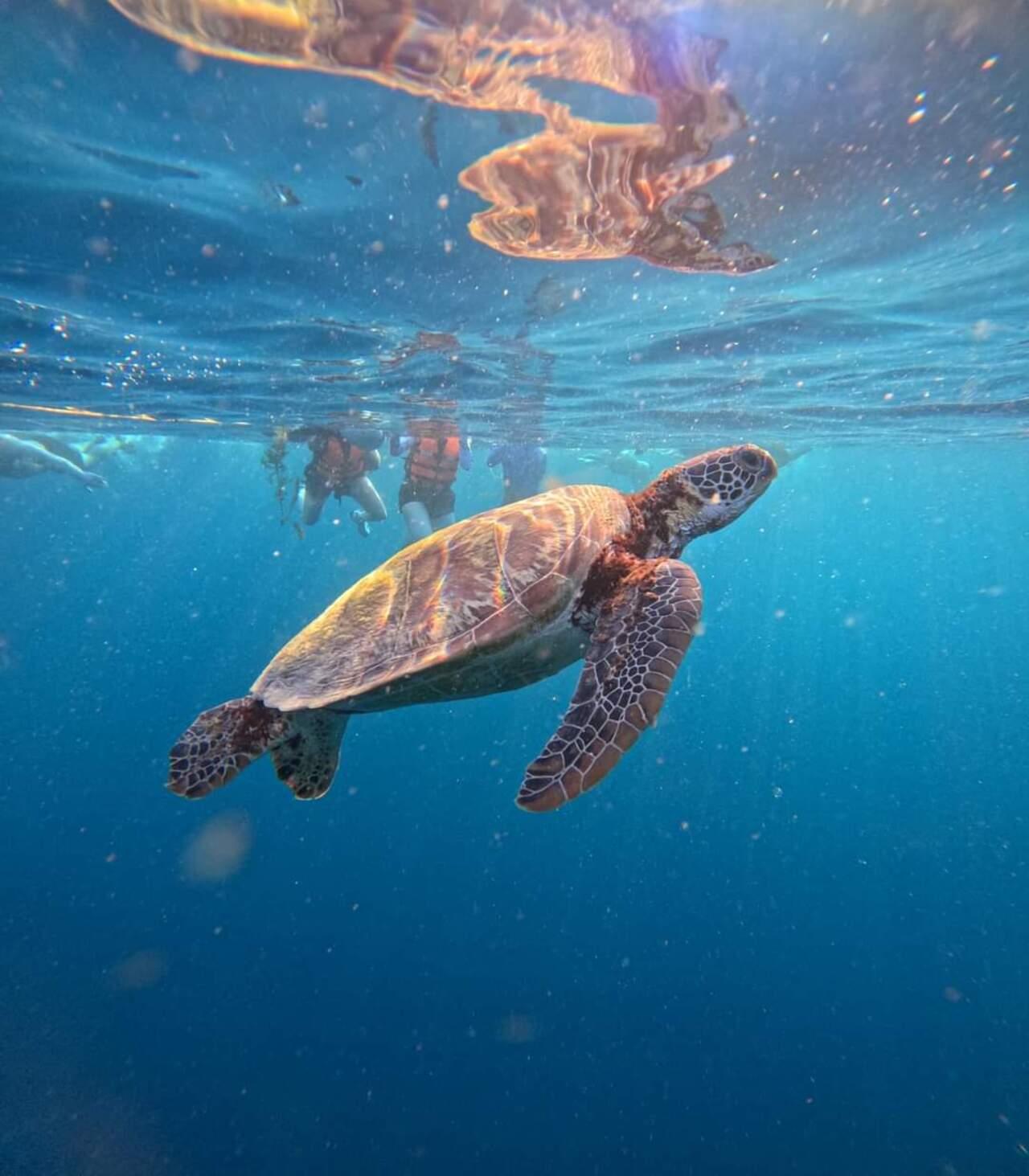
A frequent location to spot green sea turtles foraging near the seagrass.
The moalboal snorkeling sardine run offers a wild, free-roaming encounter, whereas the whale shark experience provides a controlled, guaranteed viewing opportunity; most visitors find the natural freedom of the sardine shoal more rewarding.
| Feature | Top pick Moalboal Sardine Run | Oslob Whale Shark |
|---|---|---|
Interaction Type |
Free-swimming with natural shoal | Stationary viewing beside boat |
Conservation Perspective |
Wild behavior in natural habitat | Attracted by supplemental feeding |
Predictability |
High occurrence but variable position | Nearly guaranteed sightings |
Physical Effort Required |
Moderate swimming required | Minimal effort from boat |
Environmental Impact |
Low impact on ecosystem | Significant scrutiny regarding feeding practices |
| See tickets → |
Verdict: Choose the moalboal snorkeling sardine run tour for an unscripted wildlife connection, or opt for the whale shark experience if you prefer guaranteed, low-effort moalboal snorkeling sardine run tickets with higher structural oversight, though always consider the ethics of booked moalboal snorkeling sardine run tours.
Choose your ticket, select your date, and reserve in under two minutes. Secure checkout handled by our verified partner.
Instant confirmation by email, with a mobile voucher you can save offline. No printing, no queuing at a collection desk.
Arrive at the entrance, show your voucher on your phone, and walk in. Most tickets include priority or skip-the-line access.
Practical details for your visit straight from our verified partners — hours, access, rules, and how to get there.
Panagsama Beach, Moalboal, Cebu
Main hub for all tour operators.
Take a bus from Cebu South Bus Terminal to Moalboal.
Private car hire from Mactan-Cebu International Airport.
Wear comfortable swimwear and UV-protective rash guards for the moalboal snorkeling sardine run. Reef-safe sunscreen is required to protect the coral ecosystem.
Secure lockers are provided by most operators at Panagsama Beach. It is recommended to leave unnecessary valuables at your accommodation.
Underwater cameras and GoPro devices are encouraged for capturing the moalboal snorkeling sardine run. Do not use flash photography, as it can startle the marine life.
Access to the water from Panagsama Beach involves walking over pebbles and rocky terrain. The sardine shoal is located just a short swim from the shore, suitable for confident swimmers.
Keep mobile phones in waterproof dry bags during the moalboal snorkeling sardine run. Ensure the case is securely sealed before entering the water.
Children are welcome on a moalboal snorkeling sardine run tour, provided they are comfortable in open water. Always ensure life jackets are worn by non-swimmers and children.
Numerous cafes and restaurants line the shore at Panagsama Beach. Refillable water bottles are encouraged to reduce waste at this moalboal snorkeling sardine run site.
Pets are not permitted in the water during snorkeling activities. Maintain control of pets while on the beach.
The sardine shoal is a permanent natural phenomenon near the reef edge. No feeding of marine life is allowed during your moalboal snorkeling sardine run experience.
Best time to go, insider tips, nearby landmarks, and the cancellation fine print — flip through to skim what matters to you.
How crowds, weather, and events shift across the year.
Optimal water clarity and calm seas for consistent viewing.
Occasional rain, but sardines remain active year-round.
The 06:00–09:00 window offers the best light and fewest crowds.
Small details that turn a good visit into a great one.
Do not touch or chase the sardines to avoid stressing the school.
Fins provide necessary propulsion against the current near the drop-off.
Drink plenty of water before and after your time in the salt water.
Test your mask seal on land before entering the water for the moalboal snorkeling sardine run.
Following the 06:00–09:00 arrival window ensures a peaceful experience.
Non-bookable sights within a short walk — free to visit, easy to pair.
A protected marine park famous for coral reefs and turtles.
A series of tiered turquoise waterfalls in the mountains.
A long stretch of white sand perfect for relaxing.
Flexible, no hidden fees.
Full refunds are provided for cancellations made at least 24 hours prior to the scheduled tour. Please note that the 25 PHP Environmental User Fee per person is non-refundable.
Hand-picked options within walking distance — pick a district for vibe, or a specific hotel for convenience.
Located directly on the beachfront.
Quiet tropical resort near the action.
Various homestays within walking distance of the beach.
Fifty metres from the shore at Panagsama Beach, several million sardines hold formation in a perpetual, self-organising column that bends light and rewrites the physics of the shallows. The bait ball — a defence mechanism evolved to confuse predators — has occupied this stretch of Moalboal's western coastline since the early 2010s, when local fishers first reported the phenomenon to marine biologists. What began as a seasonal curiosity has become a year-round residency, anchored by the reef's topography and the nutrient upwellings that sustain the school. The sardines rotate in a slow, hypnotic spiral, their scales catching sunlight in flashes of chrome and pewter, a living kaleidoscope visible from the surface. The moalboal snorkeling sardine run is accessible without a boat. Swimmers enter directly from the beach, fins dragging over volcanic sand, and within minutes find themselves enveloped by the swarm. The fish part and close around outstretched arms, a fluid, responsive mass that never quite touches skin but moves with such density that visibility drops to arm's length. Jacks and trevallies patrol the column's perimeter, darting in to pick off stragglers, while sea turtles — green and hawksbill — drift through the margins, unbothered by the human presence that has become part of the reef's daily choreography. The water here sits between eight and fifteen metres deep, warm and mercifully clear outside the midday hours when runoff clouds the shallows. Panagsama Beach operates as a de facto marine sanctuary, its conservation fee channelled into reef monitoring and waste management. The sardine run has transformed Moalboal from a sleepy fishing village into a snorkelling pilgrimage site, yet the infrastructure remains modest: family-run dive shops, gear rental stalls, and a concrete promenade that doubles as a fish market at dawn. The reef itself — a fringing system that extends south toward Pescador Island — shelters nudibranchs, frogfish, and mimic octopuses, species more commonly encountered on deeper technical dives. The sardines, however, require no certification, no guide, no advanced skill. They ask only that swimmers arrive early, before the sun climbs and the water warms, when the school is tightest and the light cuts cleanest through the column. Cebu's sardine snorkeling experience has drawn comparison to South Africa's sardine run, though the Moalboal phenomenon lacks the seasonal migration and predator frenzy of its Atlantic counterpart. Here, the spectacle is quiet, almost meditative — a daily convergence of fish and tide that plays out regardless of audience. The school disperses at dusk, scattering across the reef to feed, then reassembles at first light. Researchers have yet to confirm whether the same individuals return each day or whether the bait ball is a rotating cast, but for the swimmers who wade into the shallows, the question is academic. The sardines are there, they are many, and they move as one.
"The fish part and close around outstretched arms, a fluid, responsive mass that never quite touches skin but moves with such density that visibility drops to arm's length."
A step-by-step walkthrough of the visit — what you'll see, how long each stage takes, and the details that matter.
You wade from Panagsama Beach into water the temperature of skin, fins loose on your feet, mask fogging until you spit and rinse. Thirty strokes out, the sand shelf drops, and the light shifts — not darker, but refracted, strobing. You dip your face under and the sardines are already there, a cylindrical cloud that rises from the reef floor and stretches toward the surface, dense enough to block the far side of the column. You kick closer. The school splits, a corridor opening in the silver mass, then closes behind you. The sound underwater is a low static, the hiss of a million tails finning in unison. You hang suspended in the centre, arms spread, weightless, and the sardines circle. A jack materialises from below, mouth open, and the column tightens, contracting into a tighter spiral. The predator strikes, misses, vanishes. The sardines relax. You surface, breathe, descend again. A hawksbill turtle glides past your shoulder, its beak crooked, its flippers moving in slow, deliberate beats. It ignores you. You follow it into the edge of the swarm, where the sardines thin and the reef becomes visible — hard coral, clumps of staghorn, a moray eel tucked into a crevice. The turtle banks left, and you let it go. The sardines close in again, and you let them.
The site is open 00:00–23:59 daily, allowing flexibility for your snorkeling plans.
Yes, there is an Environmental User Fee of 25 PHP per person.
The best arrival window is 06:00–09:00 for clearer water and fewer crowds.
Yes, children are welcome on a moalboal snorkeling sardine run tour if they are strong swimmers.
Yes, you are encouraged to bring a waterproof camera to document the moalboal snorkeling sardine run.
Bring swimwear, a towel, reef-safe sunscreen, and your own snorkel gear if preferred.
Full refunds are available for cancellations made 24 hours prior to your moalboal snorkeling sardine run tour.
You can reach Panagsama Beach via bus from Cebu City or by private transport.
Yes, the sardine shoal is a permanent resident of the Moalboal reef and can be seen year-round.