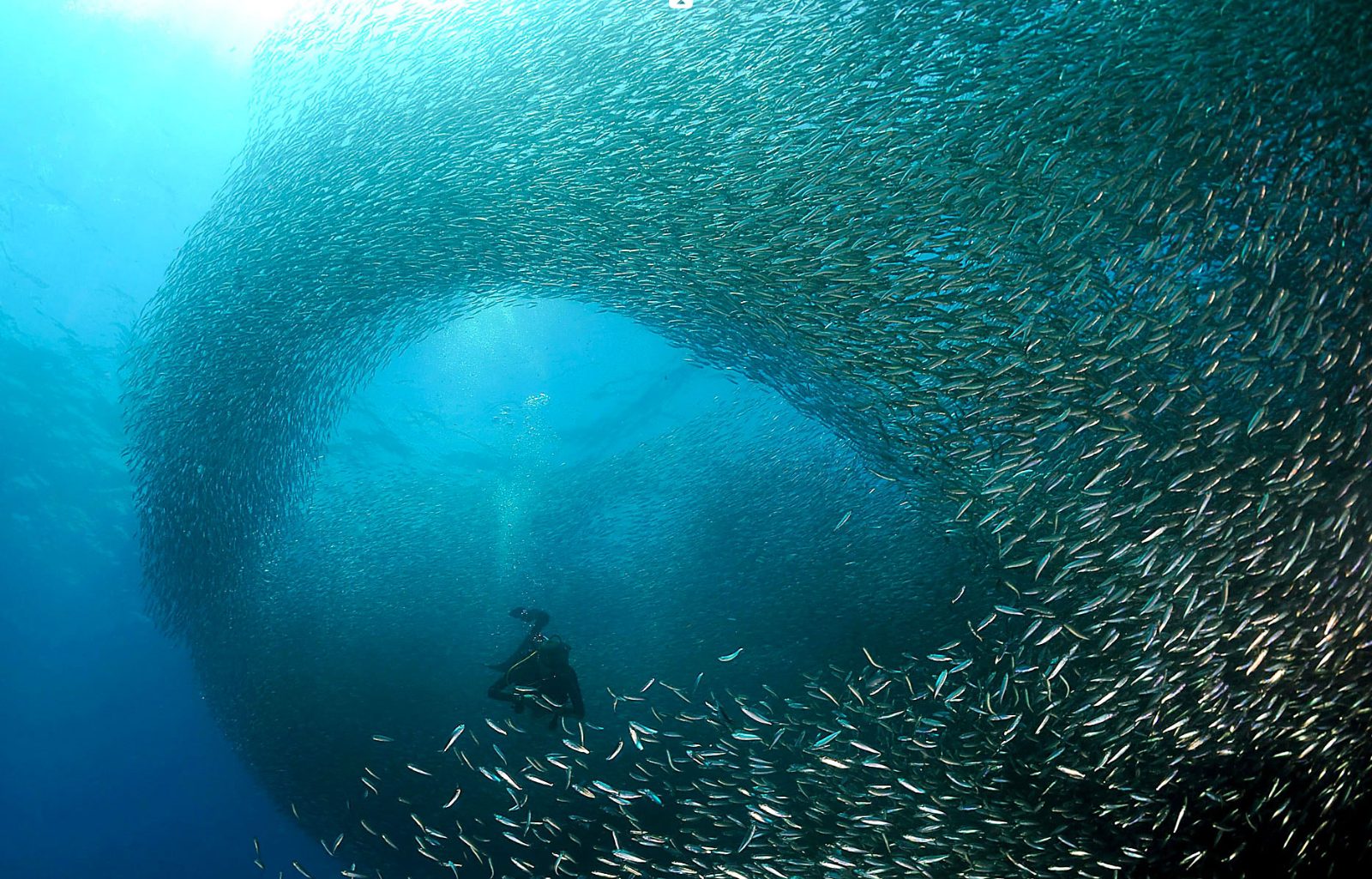
Sardine Run
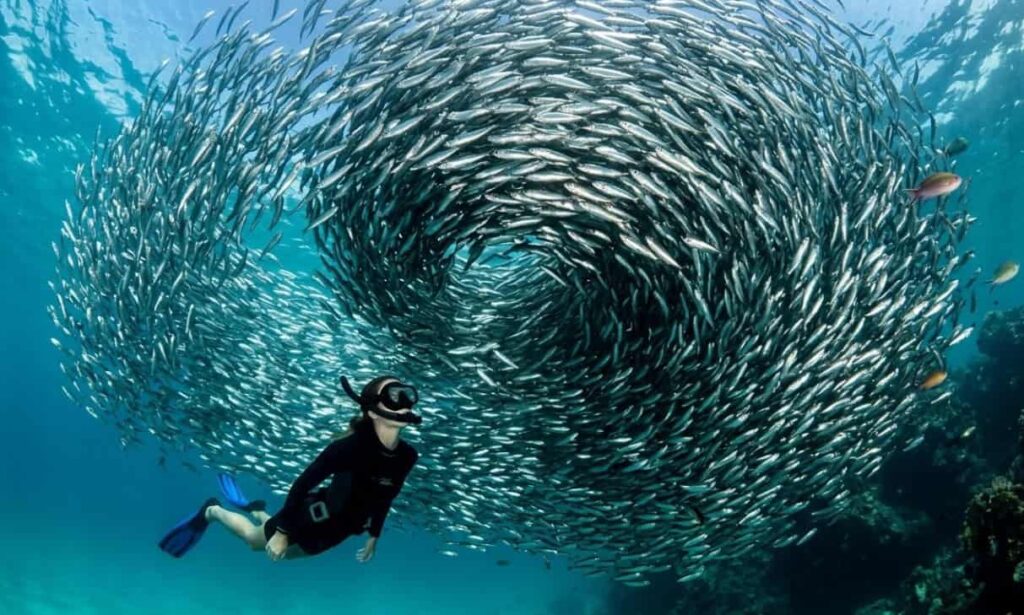
Millions of sardines form dense, shifting schools that move in unison along the reef shelf. These populations remain in the area year-round.
Swim slowly to avoid dispersing the school.

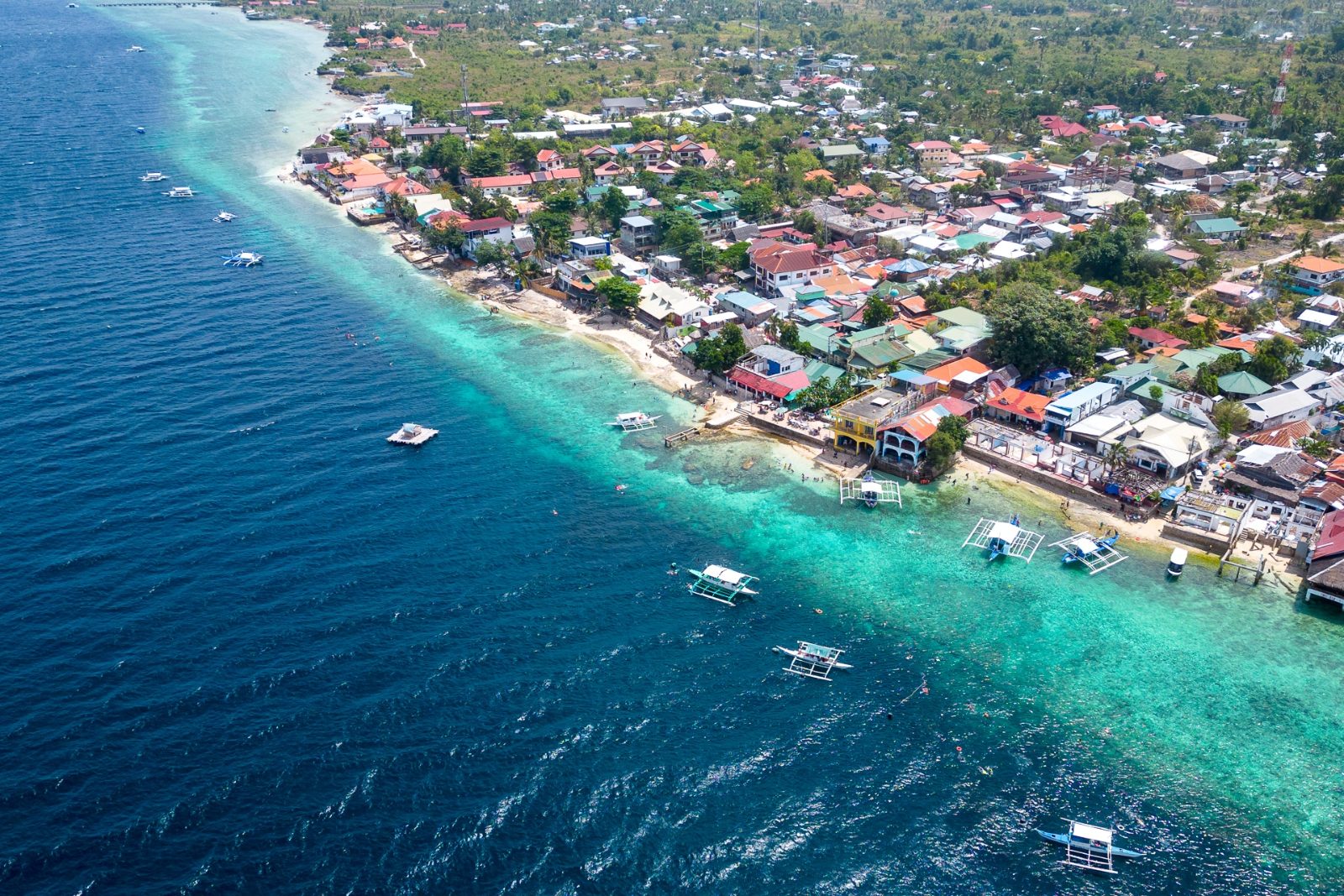
Panagsama Beach in Moalboal hosts one of the Philippines' most accessible sardine run experiences—millions of fish swirling just meters from shore. The beach operates around the clock, but visibility and marine activity follow predictable patterns tied to tide and sunlight.
Quick answer
Moalboal snorkeling Panagsama Beach is accessible 24 hours daily, with a 25 PHP Environmental User Fee for non-residents of Moalboal. The beach entrance remains open every day of the year. Optimal conditions for observing the sardine ball occur between 07:00 and 09:00, when morning light penetrates the water column and the massive school congregates close to shore before dispersing as boat traffic increases.
The sardine ball at Panagsama Beach contains an estimated 10 to 30 million fish at any given time, forming a living column that shifts with current and predator pressure. This density makes moalboal snorkeling panagsama beach one of the rare sites where you can witness pelagic schooling behavior without a boat or deep dive. The phenomenon persists year-round because the coastal shelf drops quickly beyond the beach, creating a nutrient upwelling that sustains the baitfish population. Visibility ranges from 10 to 25 meters depending on weather and tidal exchange. The sardines typically hold position between 3 and 15 meters depth, close enough for snorkelers to observe the sphere's surface while freedivers can penetrate the formation's center. Jacks, trevally and occasional thresher sharks patrol the edges, compressing the school into tighter spirals. Most snorkel activity concentrates along a 200-meter stretch north of Basdiot's small boat launching area. The seabed transitions from sand to coral rubble, then to live hard coral at the drop-off. Sea turtles forage in the shallows during slack tide. The water temperature holds steady at 27 to 29 degrees Celsius, eliminating the need for thermal protection beyond sun shirts. Local dive shops line the beachfront road, offering gear rental and guided snorkel trips, though shore access remains independent and unrestricted outside of the environmental fee collection. The user fee supports reef monitoring and waste management programs administered by the municipal government. Payment occurs at the barangay checkpoint on the access road, not at the waterline itself, and applies per person per day regardless of how many times you enter the water. Current patterns shift with the lunar cycle. Spring tides bring stronger flow and reduced visibility, while neap tides offer calmer conditions but can push the sardine ball deeper or farther offshore. The beach faces west, so afternoons bring chop and glare that degrade snorkeling conditions after 14:00. Early starts consistently deliver the clearest water and calmest surface.
“The sardine ball contains an estimated 10 to 30 million fish at any given time, forming a living column that shifts with current and predator pressure.”
Panagsama Beach in Moalboal is accessible to the public every day of the week. Visitors are welcome to access the snorkeling areas at any time, as the site remains open 24 hours a day.
Panagsama Beach is located in the Basdiot district of Moalboal, Cebu, Philippines. Most travelers reach the snorkeling area by heading west from the Moalboal town center.
Moalboal town center to Panagsama Beach road
Rental from town center via Panagsama Road
Private transfer from Cebu City to Basdiot
Look for local tricycle drivers in the Moalboal town center who regularly transport visitors directly to the Basdiot beachfront area. Parking is limited near the shoreline, so arriving by tricycle is often the most convenient method for day visitors.
The waters off Panagsama Beach provide direct access to unique marine formations and resident aquatic populations. Snorkelers can explore the immediate reef edge and the open water environments located just offshore.
Millions of sardines form dense, shifting schools that move in unison along the reef shelf. These populations remain in the area year-round.
Swim slowly to avoid dispersing the school.
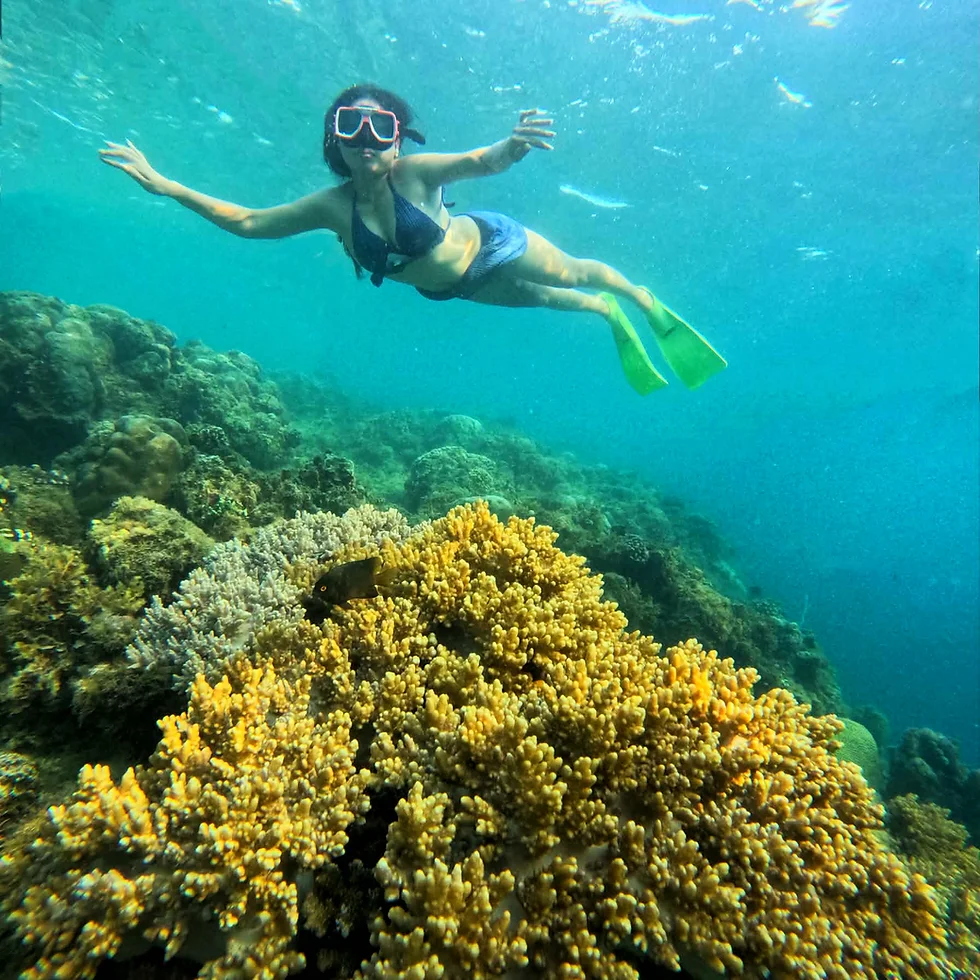
The seabed descends sharply just meters from the shore, creating a vertical reef wall rich in coral growth. This topography hosts various sponges and reef-dwelling species.
Look for small macro life along the reef wall.
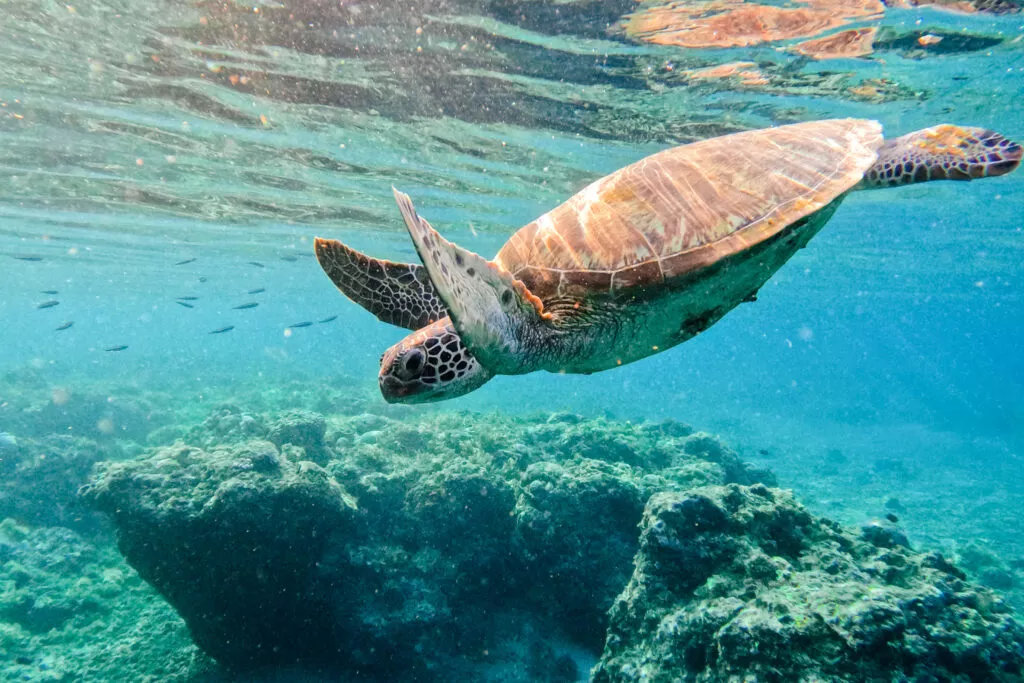
Green sea turtles frequently graze on the seagrasses and coral patches found in the shallow sections. They are commonly observed surfacing for air near the reef edge.
Maintain a respectful distance to avoid disturbing them.
The shallow area before the drop-off contains diverse hard and soft corals that support smaller reef fish. This section is accessible during higher tides for closer observation.
Observe during calm water conditions for clarity.
Panagsama Beach sits above one of the Philippines' most accessible coral reefs and the famous sardine run. Responsible snorkeling here protects the marine ecosystem that draws thousands of visitors each year.
Everything you need to know about moalboal snorkeling panagsama beach
The best arrival window is 07:00–09:00 to ensure the best visibility for the sardine run and general snorkeling activities. Arriving early helps you avoid the largest crowds and enjoy calmer waters.
Yes, there is an Environmental User Fee (EUF) of 25 PHP per person for non-residents. This fee supports the maintenance and conservation of the local marine ecosystem.
The location is in Basdiot, Moalboal, Cebu, Philippines. It is easily accessible from the main town center where many local dive shops are situated.
The area is open from 00:00–23:59 every day of the week, including weekends and holidays. You have full flexibility to plan your visit at any time during these hours.
Yes, the sardine run is a year-round phenomenon found just a short swim from the shore. You will often see large schools of fish right in the shallow reef areas.
Visitors should be mindful of the reef and marine life, avoiding contact with coral structures at all times. Please check the official site at https://moalboalcebu.gov.ph for any local updates or safety notices before you travel.
While many visitors swim independently, using a local guide can help you locate the best spots for the sardine run and assist with navigation. Ensure you have proper gear and are comfortable swimming in open water conditions.